The MMIW Toolkit is designed to assist families, communities and advocacy organizations in understanding and responding to a case of a missing or murdered Native woman. Read More ››
The National Indigenous Women’s Resource Center (NIWRC) invites you to a briefing to understand the complex and ongoing Missing and Murdered Indigenous Women (MMIW) crisis.Read More ››
2023 National Week of Action for MMIW, Presented by Pouhana O Nā Wāhine
Mana Mauli Ola Nā Wāhine: The Strength of the Breath of Life/ Power of Healing Women Live Series
Akua Wahine Hina Read More ››
2023 National Week of Action for MMIW, Presented by Pouhana O NāWāhine
Mana Mauli Ola Nā Wāhine: The Strength of the Breath of Life/ Power of Healing Women Live Series
Akua Wahine Laka and Akua Wahine Lilinoe Read More ››
2023 National Week of Action for MMIW, Presented by Pouhana O Nā Wāhine
Mana Mauli Ola Nā Wāhine: The Strength of the Breath of Life/ Power of Healing Women Live Series
Akua Wahine Pele & Akua Wahine Poliahu Read More ››
2023 National Week of Action for MMIW, Presented by Alaska Native Women's Resource Center
Indigenous Representation in the Media & MMIP Advocacy Read More ››

2023 National Week of Action for MMIW, Presented by Pouhana O NāWāhine
Mana Mauli Ola Nā Wāhine: The Strength of the Breath of Life/ Power of Healing Women Live Series
Introductions of Na Wāhine Akua, while highlighting Akua Wahine Kahalopuna Read More ››
2023 National Week of Action for MMIW, Presented by Pouhana O Nā Wāhine
Mana Mauli Ola Nā Wāhine: The Strength of the Breath of Life/ Power of Healing Women Live Series
Mōʻi Wāhine Kaʻililauokekoa Read More ››
The number of missing and unidentified persons in the United States poses one of the biggest challenges to law enforcement, medical examiners, and coroners tasked with resolving these important cases. Read More ››
This webinar highlights the fight for #JusticeForKaysera. Kaysera Stops Pretty Places was murdered on or near the Crow Reservation, in Big Horn County, on August 24, 2019, and four years later, her murder remains unresolved. Read More ››
In 2005, the movement for the safety of Native women led the struggle to include under the Violence Against Women Act a separate title for Native women called Safety for Indian Women. Read More ››
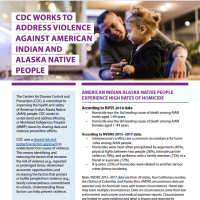
During the period of 1979 through 1992, homicide was the third-leading cause of death of Indian females aged 15 to 34, and 75 percent were killed by family members or acquaintances. Read More ››
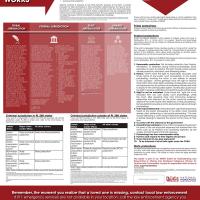
This 20 x 24” informational poster provides an overview of how jurisdiction works in Indian country and the legal rights of crime victims. Read More ››
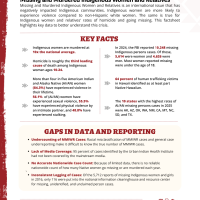
The purpose of this initial U.S. Attorney's Office Missing and Murdered Indigenous People Report is to provide tribal communities, law enforcement, and the public an overview of the currently Read More ››
The National Indigenous Women’s Resource Center (NIWRC) invites you to join us to honor missing and murdered Indigenous women and uplift the voices of surviving family members. Read More ››
In some tribal communities, American Indian women face murder rates more than 10 times the national average. In responding to this national crisis, we recognize systemic barriers that exacerbate effor Read More ››
This report to the Minnesota Legislature includes mandates that aim to reduce and end violence against Indigenous women, girls, and two spirit people in Minnesota Read More ››
During the period of 1979 through 1992, homicide was the third-leading cause of death of Indian females aged 15 to 34, and 75 percent were killed by family members or acquaintances. Read More ››
In 2005, the national movement for the safety of Native women led the struggle to include in the Violence Against Women Act a separate title for Native women called Safety for Native Women. Read More ››
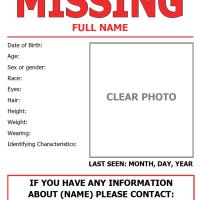
This customizable 8 x 11” missing person flyer template is an important tool for generating awareness when a Native woman is missing or suspected to be missing. Read More ››
This webinar will explore the impact of trauma and violence towards Native Hawaiian women in our communities as a result of the U.S. overthrow of our government and forced statehood. Read More ››
In 2014, the Quebec Native Women’s association was granted a small amount of money from the Quebec Ministry of Justice to work on the issue of MMIW in the province. Read More ››
This report is informed by the relatives of missing and murdered Indigenous women and girls, along with advocates, law enforcement, legislators, organizations and community members. Read More ››
Learn how you can support the movement for safety for Native women and get involved with NIWRC's work to strengthen roots and plant seeds for change. Read More ››
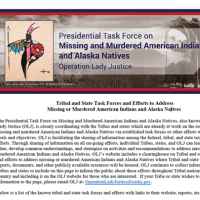
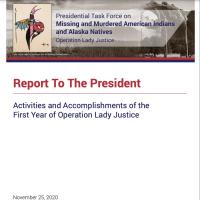
The Presidential Task Force on Missing and Murdered American Indians and Alaska Natives, also known as Operation Lady Justice (OLJ), is closely coordinating with the Tribes and states which are Read More ››
On May 3, 2019, President Trump became the first President to formally recognize Missing and Murdered American Indians and Alaska Natives Day. Read More ››
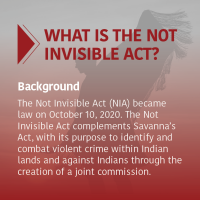
Savanna’s Act (The Act) became law on October 10, 2020. The bill is named after Savanna LaFontaine-Greywind, a member of the Spirit Lake Nation of North Dakota, who was murdered while she was eight months pregnant in August 2017. She was 22 years old.
This Special Collection is developed to highlight the issues, concerns, reccomendations and resources for addressing Missing and Murdered Indigenous Women and Girls (MMIWG) within our communities. Read More ››
This Special Collection is a new video resource initiative of the NIWRC, a project inspired by the national TED Talks: Ideas Worth Spreading. Read More ››
A focused panel discussion with Debra O’Gara on initiatives in the State of Alaska, bringing more targeted attention to the crisis of MMIWG and different efforts to both raise awareness and to highlig Read More ››
The STTARS Indigenous Safe Housing Center prioritizes safe housing and shelter for Indigenous survivors of gender-based violence. This document provides general statistics, practical responses and best practices in regards housing and MMIWG, along with a list of helpful resources. Read More ››
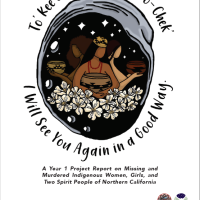
By Sovereign Bodies Institute: "To’ Kee Skuy’ Soo Ney-Wo-Chek’ addresses the severe impact of missing and murdered Indigenous women, girls, and two spirit people (MMIWG2) and trafficking of Native Read More ››
The National Indigenous Women’s Resource Center (NIWRC) invites you to learn more about the complex and ongoing Missing and Murdered Indigenous Women (MMIW) crisis. Read More ››
The presentation will review the international legal framework applicable to MMIW and other forms of gender-based violence committed against indigenous women.Read More ››
The MMIW crisis in America is not just the result of the failures of our criminal justice system, it is a result of systemic violations of indigenous women’s human rights. The presentation will review Read More ››
This virtual Conversation with the Field (CWTF) will provide the space to discuss how to prevent MMIW, how to support women and their families, and address systemic failures. Read More ››
This webinar will give a voice to survivors, fallen victims and their ohana as Missing and Murdered Native Hawaiian Women remains a form of violence and oppression that was introduced and implemented Read More ››
Findings from the December 6 panel discussion 'Crimes of Power: Reporting on Femicide,' hosted by CWGL's Journalism Initiative on Gender-Based Violence in collaboration with the NIWRC. Read More ››
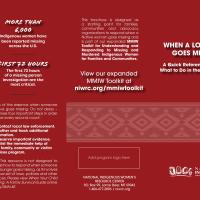
This 8 x 11” tri-fold brochure is designed as a quick reference guide for when a Native woman goes missing and the immediate steps to take in the first 72 hours. Read More ››
This comprehensive 3.5 x 5.5” pocket guide is designed to be broadly used by families and advocacy organizations to respond when a Native woman goes missing. Read More ››
This 21-page guide was designed to assist families and advocacy organizations in responding when a Native woman goes missing. It provides information about immediate steps that can be taken in the first 72 hours after a person goes missing, especially where the law enforcement response is non-existent or non-responsive. Read More ››
Join Our Mailing List
Newsletters, resources, advocacy, events and more.